
I Tried Japandi Bedroom Design for 30 Days: What Actually Worked
327 views
My bedroom looked tidy for about ten minutes.
Then the chair collected clothes, the nightstand filled with chargers and half-read books, and the bright ceiling light made the whole room feel more like a waiting room than somewhere I wanted to sleep. I wanted the calm, warm look of a Japandi bedroom—but I didn't want to turn my home into a showroom.
So I tried it for 30 days.
Not by replacing every piece of furniture. Not by buying a dozen beige accessories. I changed the room gradually, paid attention to what actually improved daily life, and kept the things that worked.
The biggest lesson surprised me: Japandi isn't really about having less. It's about making the things you keep work harder.
What I changed first—and what I left alone
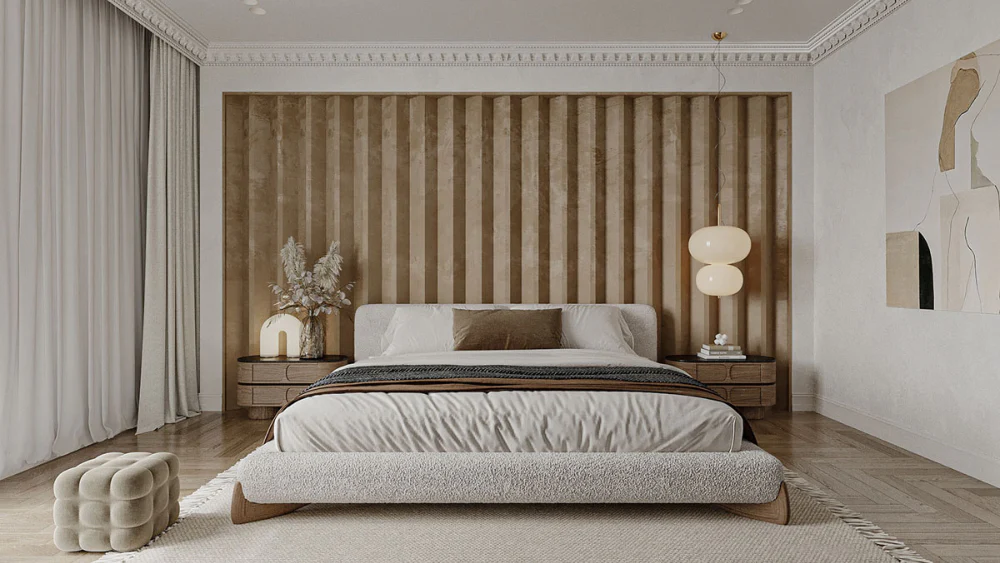
Japandi combines Japanese and Scandinavian design ideas, particularly Japanese restraint and appreciation for natural materials with Scandinavian warmth, practicality, and comfort. The familiar result is a room built around simple furniture, muted colors, wood, tactile fabrics, and plenty of visual breathing room.
My first mistake was thinking I needed to buy new furniture.
I didn't.
Instead, I removed anything that had no useful purpose in the bedroom. Decorative objects went into storage. Random cables disappeared. Clothes stopped living on the chair. Even the nightstand got stripped down to the essentials.
That alone made the room feel substantially different.
Decluttering worked better than decorating.
I kept my existing bed because it had a reasonably simple silhouette. I also kept practical storage rather than forcing everything into open shelving just because it looked good in photographs.
That distinction matters. A bedroom can look minimalist while being incredibly annoying to use.
The color change was smaller than expected
I didn't repaint the entire room in stark white.
That would have been the easy Pinterest version of minimalism, but Japandi interiors generally work better with warm, nature-inspired neutrals: soft beige, cream, taupe, warm gray, muted brown, and restrained earthy colors.
I used a simple rule:
Warm off-white or beige as the background
Natural wood as the main visual anchor
One darker tone for contrast
Very small amounts of muted green or earthy color
The difference between cool white and warm off-white was surprisingly noticeable at night. Under warm lamps, the warmer wall color felt softer rather than clinical.
I also stopped trying to make every object exactly the same shade.
That was another mistake.
A room containing five slightly different beige tones can look richer than a room where everything is identical. Texture does some of the work that color normally does.
Natural wood did more than the decorations
This was probably the most effective physical change.
I introduced warm wood through the bed area and small furniture rather than scattering bamboo baskets and wooden ornaments everywhere. Japandi guidance consistently emphasizes natural materials such as wood, linen, bamboo, stone, rattan, ceramics, and cotton.
The trick was restraint.
One substantial wooden element made more impact than several tiny decorative pieces.
I also learned that wood tone matters. Very pale wood gave the room a lighter Scandinavian feeling, while deeper brown tones pushed it toward a more Japanese-inspired atmosphere. Mixing them carefully created more depth without making the bedroom busy.
And yes, I made a mistake here.
At first I bought a small wooden accessory simply because it looked "Japandi." It had no real function. After a week, it became another thing to dust.
Out it went.
Linen bedding was worth keeping
The bedding experiment was much more successful.
I switched toward breathable-looking, textured fabrics in subdued colors instead of perfectly smooth, matching bedding. Linen and cotton work particularly well because they introduce tactile variation without requiring loud patterns.
The room immediately looked less staged.
That's important because an overly perfect Japandi bedroom can start looking like a furniture catalogue. Real bedrooms need softness. They need somewhere to throw a blanket.
I kept the bedding palette deliberately narrow: cream, oatmeal, muted brown, and a small amount of earthy green.
No giant decorative pillows.
No complicated layered arrangement that had to be rebuilt every morning.
The bed still looked finished after sleeping in it. That's the test that mattered.
The lighting change beat almost everything else
This was the change I noticed every evening.
My old setup relied too heavily on the main ceiling fixture. It was bright, useful, and completely wrong for the atmosphere I wanted.
So I added smaller sources of light around the room.
Japandi interiors often rely on soft, layered lighting rather than making one overhead fixture responsible for the entire room. Contemporary interior-design guidance also increasingly favors layered lighting over a single harsh source.
I used a bedside lamp and a second low-level light source elsewhere in the room. At night, the ceiling light stayed off whenever possible.
The result wasn't dramatic in photographs.
It was dramatic at 10:30 p.m.
The room felt quieter.
That may sound strange for a lighting change, but the softer pools of light reduced the visual intensity of the space. It became easier to switch from "doing things" mode to "I'm done for the day" mode.
The low-profile furniture looked good—but wasn't always practical
Japandi bedrooms frequently feature streamlined, low-profile furniture, which helps maintain a grounded appearance and leaves more visual space around the room.
I liked the effect.
I didn't love every practical consequence.
A very low bed can be awkward depending on your height, mobility, mattress thickness, and storage setup. If your existing bed is comfortable and functional, replacing it solely to achieve a lower silhouette isn't necessarily a smart upgrade.
This became one of my 30-day rules:
Never sacrifice daily function for a style label.
If a piece is comfortable, useful, and visually simple, it already fits the spirit of Japandi better than an impractical "Japandi" replacement.
What I thought would work but didn't
The biggest disappointment was excessive minimalism.
At the beginning, I removed almost everything from the room. It looked fantastic for a day.
Then it started feeling empty.
Japandi isn't supposed to mean a completely characterless room. The style depends on balance: negative space, natural materials, warmth, tactile surfaces, and carefully chosen objects.
I eventually brought back a few personal elements.
One piece of artwork.
A small ceramic object.
A plant.
A book.
That's it.
Those things made the room feel like somebody actually lived there.
The plant was especially useful visually because the muted green broke up the neutral palette without introducing a loud accent color.
The 30-day test revealed three things that mattered most
By the end of the month, I stopped thinking about Japandi as a shopping list.
The bedroom worked because of three changes.
First: visual clutter dropped dramatically.
I didn't need expensive storage. I simply stopped using the bedroom as a temporary dumping ground.
Second: texture replaced decoration.
Linen bedding, wood grain, a woven element, and a slightly imperfect ceramic surface created interest without filling every available surface.
Third: lighting changed the room after dark.
This was the unexpected winner.
A room can have the perfect beige walls and beautiful furniture and still feel wrong if its lighting is harsh.
A simple way to test Japandi without renovating
If you're curious about Japandi bedroom design, don't start with a shopping spree.
Try this two-stage experiment instead.
Remove before you add. Clear the nightstand, floor, chair, dresser top, and visible storage areas. Live with the emptier room for several days.
Add warmth selectively. Introduce one natural-wood element, textured bedding, a warm neutral textile, and softer lighting. Stop before the room becomes a collection of themed accessories.
Then wait.
That's the part most makeover articles skip.
Give yourself two weeks before deciding what the room still needs. You'll probably discover that several things you thought were essential aren't missed at all.
What about small bedrooms?
Japandi works particularly well in smaller rooms because visual simplicity can make the space feel less crowded. But don't interpret that as a command to buy tiny furniture.
Keep walking paths clear first.
A compact room with a full-size comfortable bed and uncluttered surroundings can feel better than a room filled with "space-saving" furniture that makes everyday use awkward.
Wall-mounted lighting can also free bedside-table space, while closed storage keeps everyday clutter out of sight.
Mirrors can help with perceived spaciousness too, but I wouldn't cover an entire wall just to make a room look larger. One appropriately positioned mirror is usually enough.
What I would spend money on now
After 30 days, my spending priorities became very different.
I'd put money into a good mattress, quality bedding, useful storage, comfortable lighting, and one or two well-made natural-material pieces before buying decorative accessories.
That order matters.
A beautiful ceramic vase won't fix a nightstand covered in cables. A designer-looking lamp won't compensate for a bed that's uncomfortable. And an expensive wooden bench isn't automatically better than the simple furniture you already own.
Japandi rewards editing.
Not accumulation.
FAQ: Japandi bedroom design
Is Japandi good for a bedroom?
Yes. Its combination of restrained decoration, natural materials, warm neutrals, simple furniture, and soft textures makes it particularly suited to spaces where you want a visually calm atmosphere.
What colors work best in a Japandi bedroom?
Start with warm white, cream, beige, taupe, soft gray, natural brown, or muted earthy tones. Small amounts of charcoal, black, moss green, clay, or terracotta can provide contrast without overwhelming the room.
Does a Japandi bedroom have to use a low bed?
No. A low-profile bed fits the aesthetic, but comfort and practicality should come first. The overall silhouette, surrounding negative space, and simplicity of the furniture matter more than forcing every piece to sit close to the floor.
Can I create a Japandi bedroom on a budget?
Absolutely. Decluttering costs nothing, and changing bedding, lighting, and a few visible accessories can have more impact than replacing large furniture. Reusing good furniture is also consistent with the style's emphasis on practicality and intentionality.
How do I keep Japandi from looking boring?
Use texture rather than lots of decoration. Combine different wood grains, linen or cotton, ceramics, woven materials, plants, and subtle tonal variations. A small amount of contrast—such as charcoal, dark wood, or muted green—can also keep a neutral room from becoming flat.
What actually stayed after 30 days
I expected the biggest improvement to come from furniture.
It didn't.
The things that survived the experiment were much simpler: fewer objects, warmer colors, natural textures, better lighting, and furniture that remained genuinely useful.
That's what I like about Japandi now. It doesn't require a bedroom to look untouched. It just asks you to notice what deserves to be there.
So if you're trying the style yourself, don't redesign the entire room this weekend.
Clear one surface tonight.
Change the lighting tomorrow.
Then live with the result for a while.
The best Japandi bedroom isn't the one with the most convincing aesthetic. It's the one you still enjoy living in after the photographs are over.
Japandi bedroom experience
bedroom makeover story
minimalist room design
design experiment
personal decor journey
Found this helpful? Share it!